The heat hit me right in the face.
As I exited Cairo International Airport, looking for my driver to the hotel, I was pleased by the 95-plus-degree weather. At home that would have felt unbearable. Here, being thousands of miles away, the novelty of a new part of the world made me more tolerant of the uncomfortable, exciting, and sometimes bizarre moments throughout the trip.
I spent two weeks there (scroll down for the detailed itinerary). I was on my way to teach in Botswana for two months, and figured that if I was flying over North Africa, it would be foolish not to stop in Egypt: a place unmatched in remnants of ancient achievement.
With curiosity for history and a deep love of cultural exploration, I went.
Some things live on nearly everyone's bucket list, and the Pyramids of Giza are one of them.
Fourteen hours after arrival, I met up with my friend Alex (he answered my "who wants to go to Egypt?" Facebook post). A friendly guide named Mohammed picked us up early in the morning. Jet-lagged and sleepy, we crossed to Giza.
After about an hour of driving and military checkpoints, we reached the Dhashur pyramids. I was stunned by the scale. We saw the "Bent Pyramid," where the angle was corrected mid-construction, then entered Sneferu's Red Pyramid by climbing down a steep ladder-like shaft nearly 50 meters.
Inside the first true "smooth" pyramid, the air was musty and damp. Artificial lighting made the chambers navigable, and we wandered through rooms I imagined were once tomb and treasure spaces.
Then came the Step Pyramid, the first tomb built in stacked tiers. Earlier royal tombs were single-layered, but Djoser and his architect Imhotep added five layers on top, creating the earliest pyramid form in the 27th century BC.
The next day we took a taxi to the West Bank: the Temple of Hatshepsut, Habu Temple with color still intact, and the Valley of the Kings.
Photos were not allowed in the Valley. We visited several major burial sites, and I went into Tutankhamen's tomb to see his original body. Alex skipped it because of the curse (knock on wood).
The West Bank more or less concluded our historical circuit. We flew back to Cairo the following day. I still have thoughts on Cairo traffic, identity, and Ramadan celebrations, which belong in part two.
But thanks for listening to my history-geek stream-of-consciousness.
Xoxo Sike, Brian Lai
Itinerary
View shareable Egypt map (Google My Maps)
Cairo
- Day 1: Check in Arabesque Hotel, Al Azhar Park, Lakeside Restaurant, Khan el Khalili
- Day 2: Dahshur Pyramids, Saqqara Step Pyramid, Giza Pyramids, Left Bank Restaurant
- Day 3: Egyptian Museum, Tahrir Square, McDonald's, Cairo Jazz Club
- Day 4: Ramses Station, Coptic Cairo Museum, Hanging Church, Saladin Citadel, Sleeping Train
Aswan
- Day 5: Check in Movenpick Hotel, KFC, Nubian Museum, Fatimid Cemetery, start of Ramadan
- Day 6: Befriend Mohammed Aboudha, sail around Elephantine Island, El Dokka restaurant
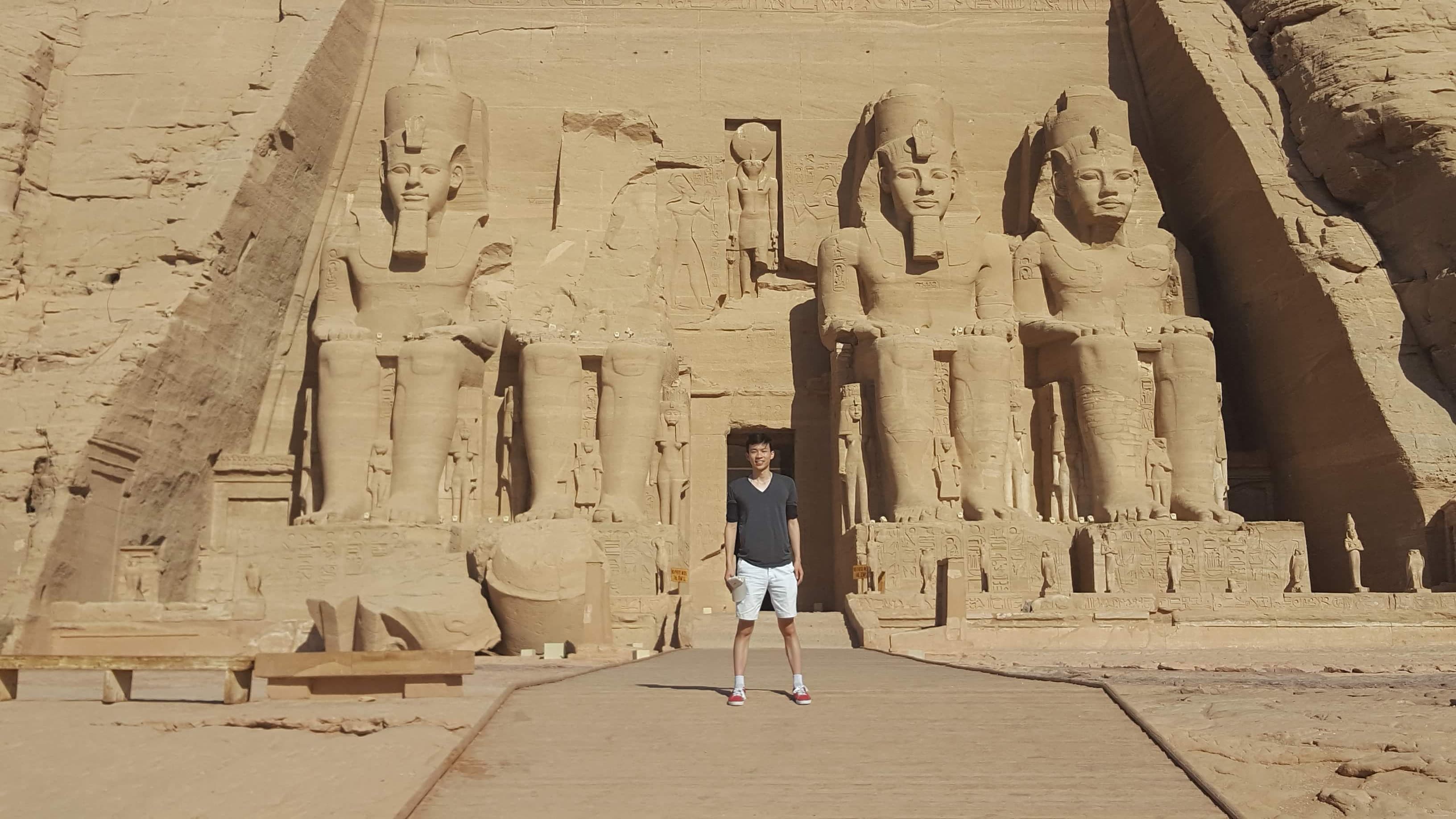
- Day 7: Abu Simbel, Aswan High Dam, check out of Movenpick, train to Luxor
Luxor
- Day 8: East Bank day, Karnak Temple, drive around Luxor, Luxor Temple, Snobby Restaurant
- Day 9: West Bank day, Temple of Hatshepsut, Habu, Valley of the Kings, mosque, The Lantern Restaurant
Suez & Bahariya Oasis
- Day 10: Fly back to Cairo, drive to Suez, Suez National Museum, Suez Canal, Ramadan celebrations
- Day 11: Drive to Bahariya Oasis, Black Desert, White Desert National Park, star gaze!
- Day 12: Return to Cairo, City Stars Mall
- Day 13: 2AM flight to Addis Ababa, en route to Botswana